Prunus persica
Peach
Physical Traits & Growth
Typical max. heightMaximum height in typical conditions, in metres. Full data also shows maximum achievable height in exceptional conditions.:
6m
6m
But depends on rootstock
Max. canopy widthLikely maximum horizontal width of the canopy, in metres:
Bushy and rounded
4-8m wide
Size of shadowSize of shadow based on a fully grown tree, categorised as low, medium or high: Low (38 sqm)
Canopy densityShading intensity of the canopy when in full leaf. Categorised from open to dense.: Moderately dense
Leaf emergenceTime of leaf emergence, categorised as very early, early, late, or evergreen: Early (Apr to Nov )
Growth rateHow quickly the tree grows during establishment. Categorised as low, moderate or high, with very high used in exceptional cases.: Moderate to high
LongevityExpected lifespan of the tree: Short-lived, sometimes only 20-25 years
Management & Systems
Approach to silvicultureCoppicing and pollarding ability: Orchard tree
Establishment requirementsCommon requirements to establish the tree: Watering, formative pruning , mulching, protection from rabbits
Management requirementsCommon long-term management needs such as pruning. Categorised as low, moderate or high.:
Watering during growing season, benefits from feeding
Annual pruning
Flowers may need protection from frosts
Pruning timeOptimal season for pruning: Summer
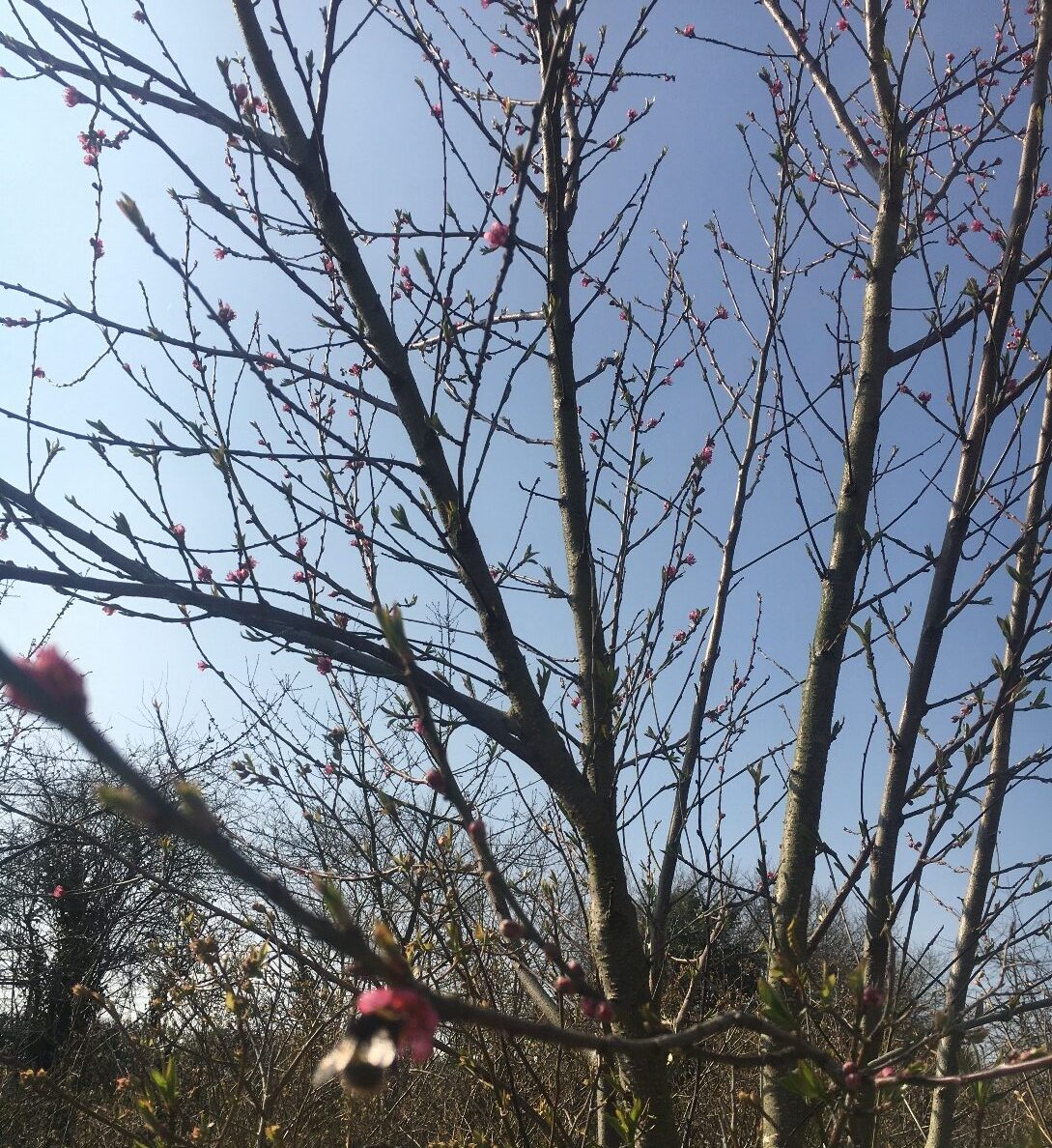
Prunus persica Peach in flower with bumblebee/ Bee Happy Plants & Seeds
Products & Economy
Food productsCommon food products such as fruits and nuts: Fruits, raw or processed including canning, juicing, drying
Wood productsCommon wood products, including timber, turnery, and pulp: –
BiomassCommon biomass products such as fuelwood: –
Speciality productsOther speciality and niche products: Kernel oil, edible flowers
Time until market (food)Number of years until the tree produces food products: Full fruiting 5-6 years after planting
Time until market (timber)Number of years until the tree produces wood products: –
Ecology & Utility
Nutrient and organic matter accumulationRough estimate of soil-improving properties, with larger and deeper-rooting trees predicted to have higher value. Categorised as low, moderate or high.: Moderate – deep roots and low canopy area
Nitrogen fixationNitrogen-fixing properties, categorised as yes or no: No
High carbon sequestrationAll trees sequester carbon, but faster-growing, larger trees generally have higher sequestration potential.:
Short-term (20 years): Relatively low
Medium-term (40 years): Very low
Long-term (60 years): Very low
Native status in the UKCategorised as native, long-established, or recent introduction.: Recent introduction (neophyte) – survivor
High wildlife valueMost trees are likely to be of some value to wildlife, but some trees are of generally higher value to various wildlife groups: Likely moderate
Pollinators
Flowering period (pollinator benefit)Typical flowering months: Mar-Apr
High pollen and nectar value for pollinatorsValue of flowers to pollinators: Likely moderate to high
Susceptibility & Risks
Risk of toxicity to livestockReported potential toxicity to livestock, categorised as yes or no. Toxicity is complex and often context-specific.: Toxic (especially young leaves, twigs, and seeds)
Risks to farming operationsOther risks such as suckering roots, very large tree size, secondary host for aphids, and flammability: Host of Myzus persicae, an aphid of vegetable crops
Disease susceptibilitySusceptibility of the tree (not tree products) to diseases, e.g. fungal and bacterial disease:
Moderate to high (some varieties have improved resistance)
Susceptible to a variety of diseases, especially peach leaf curl, also honey fungus, phytophthora, replant disease, powdery mildew, silver leaf
High Risk Host for Xylella fastidiosa
Invertebrate pest susceptibilitySusceptibility of the tree (not tree products) to invertebrate pests, e.g. aphids and other insects:
Low
Aphids and earwigs can occasionally cause problems
Wasps damage fruits
Aphids are common but do little damage
Vertebrate damage susceptibilitySusceptibility of the tree (not tree products) to vertebrate pests, e.g. squirrels and deer:
Moderate to high
Rabbits can damage young trees
Birds can attack fruits