Juglans regia
Walnut
Physical Traits & Growth
Typical max. heightMaximum height in typical conditions, in metres. Full data also shows maximum achievable height in exceptional conditions.:
30m
20m
30m
24m
30m
27m
Max. canopy widthLikely maximum horizontal width of the canopy, in metres:
A globular to ovoid crown. More conical when young. Up to 15m in width at maturity
15m wide
Spreading, domed crown
Size of shadowSize of shadow based on a fully grown tree, categorised as low, medium or high: High (318 sqm)
Canopy densityShading intensity of the canopy when in full leaf. Categorised from open to dense.: Moderate
Leaf emergenceTime of leaf emergence, categorised as very early, early, late, or evergreen: Late (May to Nov )
Growth rateHow quickly the tree grows during establishment. Categorised as low, moderate or high, with very high used in exceptional cases.: Moderate
LongevityExpected lifespan of the tree: Longevity 280 years , or 150-200 years or more
Management & Systems
Typical systemsCommon agroforestry or silvicultural systems where this species is used:
Lowland
Arable and pasture, more widely grown in AF in France
Arable, pasture and veg systems
Approach to silvicultureCoppicing and pollarding ability:
Orchard tree or open/forest tree
Can be pollarded
Establishment requirementsCommon requirements to establish the tree:
Protection required from rodents and birds
Staking and irrigation required
Formative pruning usually necessary in February or late summer
Benefits from weeding
Management requirementsCommon long-term management needs such as pruning. Categorised as low, moderate or high.:
Minimal pruning to remove dead and crossed branches
High pruning required for quality timber
Pruning timeOptimal season for pruning: Summer or winter (mid)
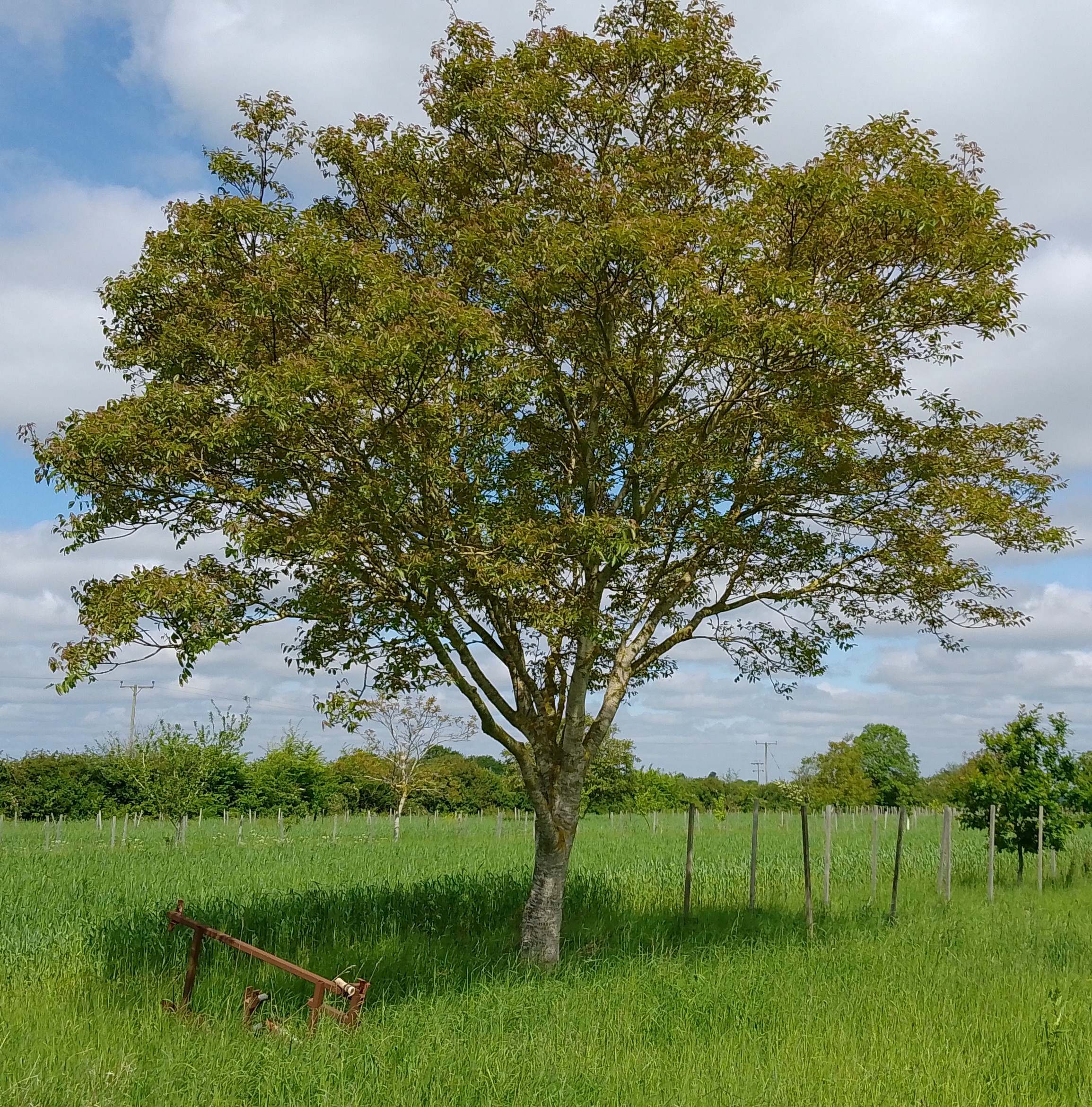
Walnut, Wakelyns, UK / Tom Staton / https://creativecommons.org/licenses/by-sa/4.0/deed.en
Products & Economy
Food productsCommon food products such as fruits and nuts:
Nuts , typically from varieties
Most nuts produced in England have insufficient oil content
Wood productsCommon wood products, including timber, turnery, and pulp:
High-value timber or sawnwood
Max YC 8
Hybrids available with improved vigour (e.g. NG23) but likely lower value
BiomassCommon biomass products such as fuelwood: –
Speciality productsOther speciality and niche products: Oil, dye
Time until market (food)Number of years until the tree produces food products:
Grafted trees begin cropping after about 4 years
Young trees begin cropping after 5-6 years
10 years
Time until market (timber)Number of years until the tree produces wood products: Typically 60 years , exceptionally 30 years
Ecology & Utility
Nutrient and organic matter accumulationRough estimate of soil-improving properties, with larger and deeper-rooting trees predicted to have higher value. Categorised as low, moderate or high.: High – deep roots and large canopy area
Nitrogen fixationNitrogen-fixing properties, categorised as yes or no: No
High carbon sequestrationAll trees sequester carbon, but faster-growing, larger trees generally have higher sequestration potential.:
Short-term (20 years): Moderate
Medium-term (40 years): Moderate
Long-term (60 years): Relatively low
Native status in the UKCategorised as native, long-established, or recent introduction.: Long-established introduction (archaeophyte) – cultivated
High wildlife valueMost trees are likely to be of some value to wildlife, but some trees are of generally higher value to various wildlife groups:
Relatively low
Highest value for mycorrhizal fungi and leaf litter
Pollinators
Flowering period (pollinator benefit)Typical flowering months: Jun
High pollen and nectar value for pollinatorsValue of flowers to pollinators: Low
Susceptibility & Risks
Risk of toxicity to livestockReported potential toxicity to livestock, categorised as yes or no. Toxicity is complex and often context-specific.: Risk of toxicity to horses from wood shavings, and to all animals from mouldy walnuts
Risks to farming operationsOther risks such as suckering roots, very large tree size, secondary host for aphids, and flammability: Allelopathic (but less than black walnut), particularly affecting tomatoes and apples , and Elaeagnus and Alnus spp.
Disease susceptibilitySusceptibility of the tree (not tree products) to diseases, e.g. fungal and bacterial disease:
Moderate (lower in disease-resistant cultivars)
Walnut leaf blotch, fungal diseases
Bacterial blight
May be susceptible to walnut leaf spot, walnut leaf blotch, honey fungus and coral spot
Invertebrate pest susceptibilitySusceptibility of the tree (not tree products) to invertebrate pests, e.g. aphids and other insects:
Low
Largely pest free, susceptible to leaf gall and codling moth (nuts)
Vertebrate damage susceptibilitySusceptibility of the tree (not tree products) to vertebrate pests, e.g. squirrels and deer:
Moderate
Susceptible to browsing by deer and rabbits
Grey squirrels can destroy nut crop