Tilia platyphyllos
Large-leaved Lime
Physical Traits & Growth
Typical max. heightMaximum height in typical conditions, in metres. Full data also shows maximum achievable height in exceptional conditions.:
40m
40m
20-30m
41m
Max. canopy widthLikely maximum horizontal width of the canopy, in metres:
Broad ovoid to globular, can become over 20m wide
Often narrow
Size of shadowSize of shadow based on a fully grown tree, categorised as low, medium or high: High (644 sqm)
Canopy densityShading intensity of the canopy when in full leaf. Categorised from open to dense.: Moderately dense
Leaf emergenceTime of leaf emergence, categorised as very early, early, late, or evergreen: Early (Apr to Nov )
Growth rateHow quickly the tree grows during establishment. Categorised as low, moderate or high, with very high used in exceptional cases.: Moderate to high
LongevityExpected lifespan of the tree: Long-lived to 800+ years
Management & Systems
Approach to silvicultureCoppicing and pollarding ability: Can be pollarded and heavily pruned and coppiced
Establishment requirementsCommon requirements to establish the tree: Requires protection from browsing
Management requirementsCommon long-term management needs such as pruning. Categorised as low, moderate or high.: Minimal or no pruning
Pruning timeOptimal season for pruning: Spring (late) to summer
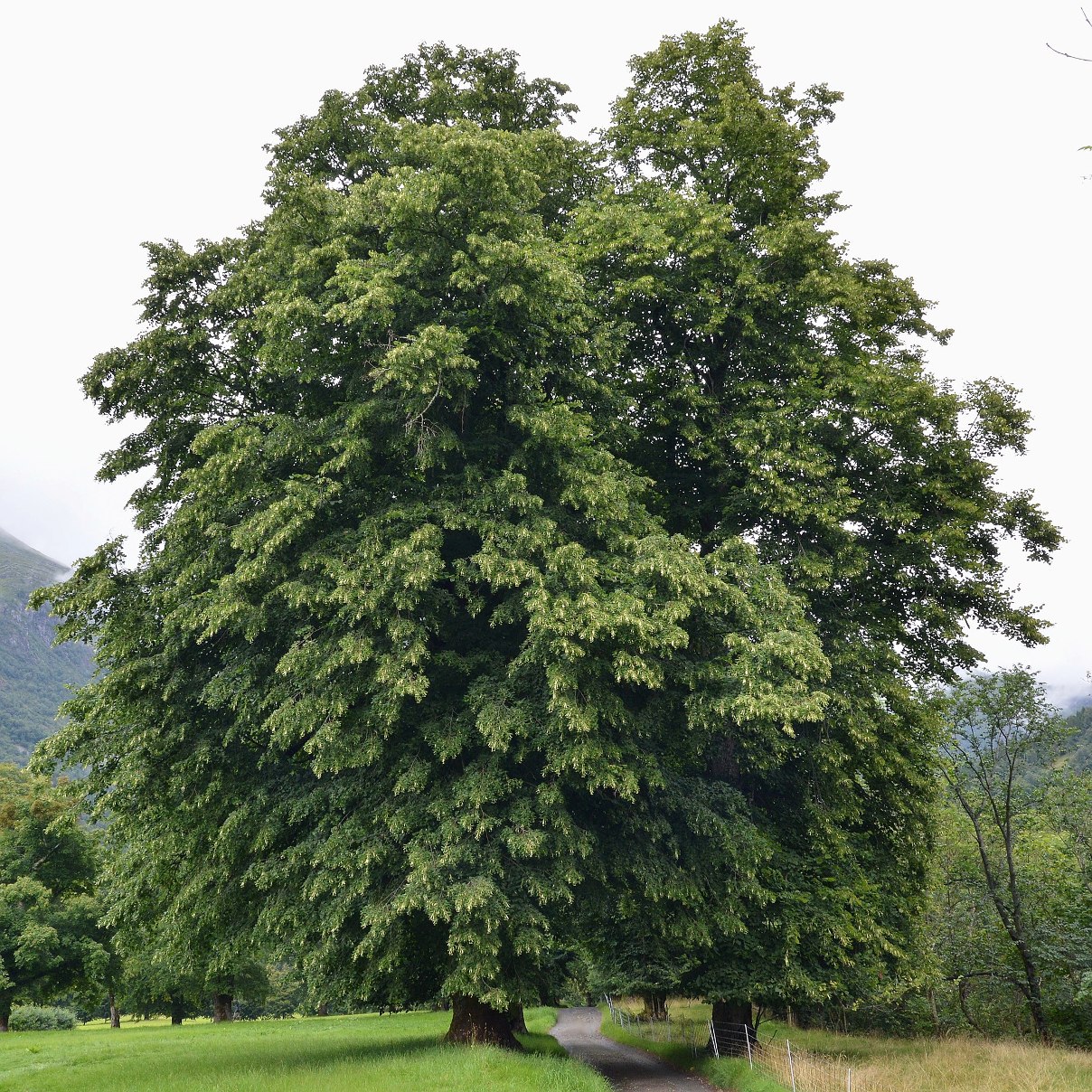
A short avenue of 4 Large-leaved Limes Tilia platyphyllos in Kvinnherad, Norway/ Ryan Hodnett/ https://creativecommons.org/licenses/by-sa/4.0/deed.en
Products & Economy
Food productsCommon food products such as fruits and nuts: –
Wood productsCommon wood products, including timber, turnery, and pulp:
Timber
Max YC 10
BiomassCommon biomass products such as fuelwood: –
Speciality productsOther speciality and niche products: –
Time until market (food)Number of years until the tree produces food products: –
Time until market (timber)Number of years until the tree produces wood products: Unknown
Ecology & Utility
Nutrient and organic matter accumulationRough estimate of soil-improving properties, with larger and deeper-rooting trees predicted to have higher value. Categorised as low, moderate or high.:
High – deep roots and large canopy area
Leaf litter rapidly returned to soil
Nitrogen fixationNitrogen-fixing properties, categorised as yes or no: No
High carbon sequestrationAll trees sequester carbon, but faster-growing, larger trees generally have higher sequestration potential.:
Short-term (20 years): High
Medium-term (40 years): High
Long-term (60 years): High
Native status in the UKCategorised as native, long-established, or recent introduction.: Native
High wildlife valueMost trees are likely to be of some value to wildlife, but some trees are of generally higher value to various wildlife groups:
Moderate
Highest value for mycorrhizal fungi, leaf litter, pollen and nectar
Pollinators
Flowering period (pollinator benefit)Typical flowering months: Jun to Jul
High pollen and nectar value for pollinatorsValue of flowers to pollinators: Moderate to high
Susceptibility & Risks
Risk of toxicity to livestockReported potential toxicity to livestock, categorised as yes or no. Toxicity is complex and often context-specific.: None known
Risks to farming operationsOther risks such as suckering roots, very large tree size, secondary host for aphids, and flammability: Capable of becoming very large tree
Disease susceptibilitySusceptibility of the tree (not tree products) to diseases, e.g. fungal and bacterial disease:
Low
Remarkably disease-free
May be susceptible to sooty mould, phytophthora root rot and honey fungus
Invertebrate pest susceptibilitySusceptibility of the tree (not tree products) to invertebrate pests, e.g. aphids and other insects:
Moderate
Frequently infested with lime aphids
May be susceptible to aphids, horse chestnut scale, caterpillars, sawflies and gall mites
Vertebrate damage susceptibilitySusceptibility of the tree (not tree products) to vertebrate pests, e.g. squirrels and deer:
Moderate
Susceptible to browsing
Not damaged by squirrels